How Long Does Invisalign Take? Treatment Timeline from Start to Finish

Patients considering Invisalign throughout Solana Beach, Del Mar, Encinitas, Rancho Santa Fe, and Cardiff-by-the-Sea want to know how long treatment takes. The answer depends on case complexity, patient compliance, and specific treatment goals. Understanding the complete timeline from consultation to retention helps set realistic expectations. For a comparison with traditional braces, the Invisalign vs braces comparison guide provides additional context. The complete Invisalign guide offers foundational information about clear aligner therapy.
Table of Contents
Key Takeaways | Total Treatment Overview | Consultation Phase | Digital Scanning | ClinCheck Planning | Aligner Fabrication | Active Treatment | Progress Checks | Refinements | Retention Phase | Timeline by Complexity | FAQs | About the Dentist
Key Takeaways (TL;DR)
- ■Total treatment time ranges from 6 to 24+ months depending on case complexity and compliance.
- ■Initial consultation to first aligners takes 4-6 weeks including records, ClinCheck approval, and fabrication.
- ■Each aligner is worn 1-2 weeks for 20-22 hours daily before moving to the next.
- ■Progress check appointments occur every 6-8 weeks to monitor tracking and compliance.
- ■Refinements add 4-12 weeks to treatment and are needed in most cases.
- ■Retention is lifelong with full-time wear for 3-6 months then nighttime only.
Total Invisalign Treatment Overview
The complete Invisalign journey includes several distinct phases. Understanding each phase helps patients prepare mentally and logistically for orthodontic treatment.
| Phase | Duration | Key activities |
|---|
Consultation Phase: Evaluation and Records (1-2 Weeks)
The first appointment establishes whether Invisalign suits the patient's needs. The dentist performs a clinical examination, reviews medical and dental history, checks for cavities and gum disease, and discusses treatment goals. Records taken during this phase include:
- Panoramic X-ray showing all teeth and supporting bone
- Cephalometric X-ray (lateral head film) for bite analysis in complex cases
- Intraoral and extraoral photographs from multiple angles
- Periodontal probing to assess gum health
If decay or gum disease is present, those conditions must be treated before Invisalign begins. This adds variable time depending on the treatment needed. Patients with healthy teeth and gums move directly to digital scanning.
Digital Scanning Phase (One Appointment, 10-15 Minutes)
Digital scanning replaces traditional putty impressions. Using an intraoral scanner like iTero, the dentist captures a three-dimensional model of the patient's teeth, gums, and bite. The wand moves around each tooth, taking thousands of images per second. The software stitches these images into a virtual model.
Patients find scanning comfortable and quick. There is no gagging from impression material. The scan data uploads directly to Align Technology's servers for treatment planning. Patients receive a preview of their simulated ClinCheck within minutes in some practices, though final planning takes longer.
ClinCheck Treatment Planning (1-3 Weeks)
ClinCheck is Invisalign's proprietary software for designing tooth movement. The dentist uses the scan data to map each tooth's movement from its current position to the desired final position. The software calculates the number of aligners needed and the movement per aligner.
After the dentist designs the plan, Align Technology's technicians refine it. The complete ClinCheck simulation shows tooth movement at each stage. Patients review the simulation with their dentist and approve the plan before fabrication begins. Changes requested at this stage add time. Most patients approve the initial plan or request one revision round.
What patients should know: The ClinCheck simulation shows projected outcomes based on ideal compliance. Actual results may differ if aligners are not worn 20-22 hours daily. Review the plan carefully with your dentist. Ask about the number of aligners, whether attachments are needed, and whether elastics are part of the treatment.
Aligner Fabrication and Delivery (2-4 Weeks)
After ClinCheck approval, Align Technology manufactures the custom aligners. Each aligner is produced using 3D printing technology to create precise molds, then thermoforming SmartTrack material over those molds. Aligners are trimmed, polished, and packaged in sequential numbered pouches.
Fabrication typically takes 2 to 4 weeks. At the delivery appointment, the dentist checks that all aligners fit properly. Attachments (small tooth-colored buttons) are bonded to specific teeth if needed. Attachments give aligners additional grip points for more complex movements. The dentist demonstrates insertion, removal, and cleaning techniques. Patients receive all aligners or a batch of 4-6 at a time, depending on provider preference.
Active Treatment Phase (6-24 Months)
This is the main phase of Invisalign treatment. Patients wear each aligner for 1 to 2 weeks, typically 20 to 22 hours per day. Removing aligners is permitted only for eating, drinking anything other than water, and cleaning teeth.
The number of aligners varies by case complexity:
- Mild cases: 10 to 20 aligners (3-6 months of wear at 1 week each)
- Moderate cases: 20 to 40 aligners (6-12 months)
- Complex cases: 40 to 60+ aligners (12-18+ months)
Each new aligner is worn at night before bed. Patients typically change aligners every 7 days for standard Invisalign or every 14 days for Invisalign Lite or specific protocols. The dentist specifies the wear schedule based on case requirements.
Progress Check Appointments (Every 6-8 Weeks)
Patients return to the dentist every 6 to 8 weeks for progress checks. These appointments last 15-30 minutes and include:
- Checking that aligners fit properly without gaps between the aligner edge and tooth
- Verifying teeth are tracking according to the ClinCheck plan
- Assessing compliance (wear time) through aligner condition and tracking
- Providing the next set of aligners
- Re-attaching any attachments that have come off
- Checking gum health and oral hygiene
Missing progress checks delays treatment. If tracking issues are detected early, the dentist can adjust the plan before significant deviations occur.
Refinements Phase (4-12 Weeks Additional)
Most Invisalign cases require refinements. Refinements are additional aligners ordered after the initial series is complete. They address teeth that did not track perfectly or fine-tune the final result.
The refinement process repeats the scanning and ClinCheck steps but with fewer aligners typically. Patients receive new digital scans, the dentist designs a refinement plan, and Align Technology fabricates additional aligners. Refinement rounds typically add 4 to 12 weeks to total treatment time. Most patients need 1 refinement round. Some complex cases need 2 or 3 rounds.
Many providers include an unlimited number of refinement rounds in the initial treatment fee. Others charge for refinements beyond a specified number. Patients should clarify the refinement policy before starting treatment.
Retention Phase (Lifelong)
After active treatment ends, patients enter the retention phase. Without retainers, teeth shift back toward original positions due to ligamentous memory, bone remodeling, and normal aging. This process is called relapse.
Typical retention protocols include:
- Full-time retainer wear (20-22 hours daily) for 3 to 6 months after active treatment
- Then nighttime-only wear (while sleeping) indefinitely
- Retainer replacement every 3-5 years as they wear out or become loose
Invisalign's Vivera retainers are the brand's recommended retention solution. Four retainers are included in the Vivera package. Fixed (bonded) lingual retainers, a thin wire glued behind front teeth, are another option. Some patients receive both: fixed retainers on lower front teeth and removable retainers for upper teeth.
Critical information: Patients who discontinue retainer use will experience relapse. The timeline varies: some relapse within months, others within years. No orthodontic treatment, regardless of which appliance was used, is permanent without retention. Budget for replacement retainers every few years as part of long-term treatment cost.
Invisalign Timeline by Case Complexity
| Complexity level | Examples | Number of aligners | Active treatment duration | Including refinements |
|---|---|---|---|---|
| Mild | Minor crowding (1-3mm), small gaps, mild relapse | 10-20 | 3-6 months | 4-6 months |
| Moderate | Moderate crowding (4-6mm), overbite, crossbite, spacing | 20-40 | 6-12 months | 8-14 months |
| Complex | Severe crowding, underbite, open bite, extraction cases | 40-60+ | 12-18+ months | 14-24+ months |
These timelines assume good compliance (20-22 hours daily wear). Poor compliance significantly extends treatment duration. Each missed day adds approximately three days to total time because teeth require consistent force application for movement.
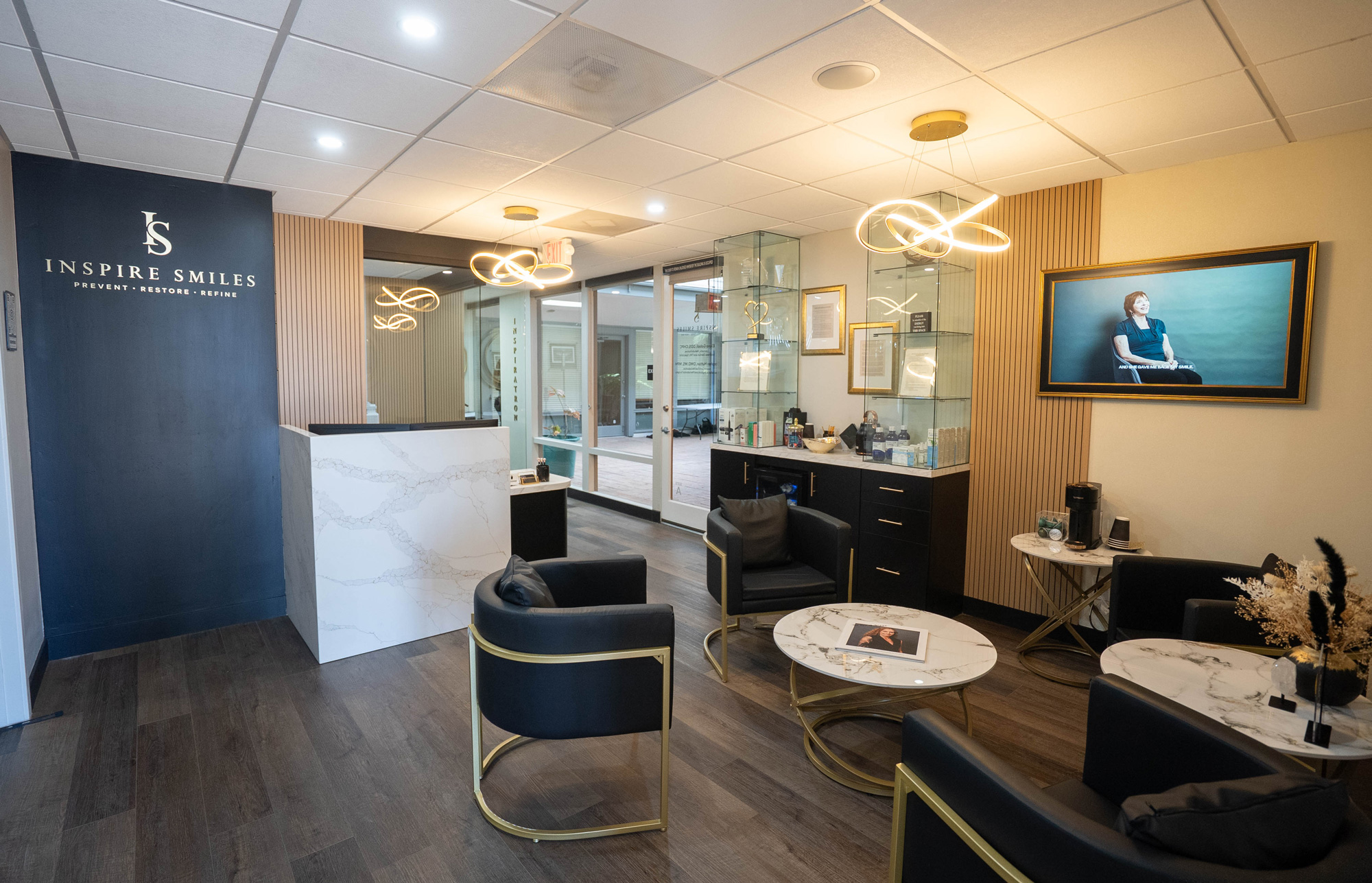
For patients in Solana Beach, Del Mar, Encinitas, Rancho Santa Fe, and Cardiff-by-the-Sea, Dr. Elona Gaball at Inspire Smiles provides realistic timeline estimates based on each patient's specific orthodontic condition. The Invisalign service page offers practice-specific information about treatment planning and timeline expectations.
Frequently Asked Questions About Invisalign Timeline
Can I wear each aligner for less than the recommended time to finish faster?
No. Reducing wear time prevents teeth from moving fully into position. Moving to the next aligner early causes tracking errors, poor fit, and may require starting over. Follow the prescribed schedule exactly.
What happens if I miss wearing aligners for a few days?
Missing 2-3 days allows teeth to shift backward slightly. The aligner may feel tight or not seat fully. Wear the aligner for an extra 2-3 days before moving to the next one. Contact your dentist if the aligner does not fit after catching up.
How many refinement rounds are typical?
Most patients need 1 refinement round. About 30 percent of patients need 2 rounds. Less than 10 percent need 3 or more rounds. Complex cases and poor compliance increase refinement needs.
Do I need to take time off work for Invisalign appointments?
Most appointments take 15-30 minutes. The delivery appointment may take 45-60 minutes for attachment bonding. Progress checks are quick and typically scheduled during regular office hours. Many working professionals schedule during lunch or before/after work hours.
How long do I need to wear retainers after Invisalign?
Lifelong. Full-time wear (20-22 hours daily) for 3-6 months, then nighttime-only (while sleeping) indefinitely. Retainers wear out every 3-5 years and need replacement. Stopping retainer use guarantees eventual relapse.
About the Dentist
Dr. Elona Gaball, DDS, CHPC is a cosmetic and restorative dentist with over 25 years of clinical experience practicing since 2000. She leads Inspire Smiles in Solana Beach, serving patients throughout San Diego's North Coast including Del Mar, Rancho Santa Fe, Encinitas, and Cardiff-by-the-Sea.
Dr. Gaball is certified in Invisalign and has completed advanced training through the UCLA Aesthetic Continuum, Magne Education, and a UCLA TMD/Orofacial Pain residency. Her philosophy of care is rooted in love, honesty, and wellness. She recommends only treatments that are truly indicated and takes a conservative approach to care.
Sources and References
- American Dental Association (ADA) — Orthodontic treatment guidelines
- American Association of Orthodontists (AAO) — Patient education resources
- Align Technology / Invisalign — Clinical protocols and treatment planning
- PubMed Central — Research on clear aligner treatment duration
Last reviewed: April 2026